Ben Turner on why promoters have no excuse left, and why nurturing new talent is a long-term investment.
Debates about representation in electronic music tend to get heated fast. Comment threads and panel soundbites distort arguments that deserve more space, whether that’s about lineup balance, studio access, mentorship or safety.
At the heart of the series is a simple question: can we close the gender gap?
No one is asking for consensus; that’s impossible. But by opening the floor, we can build a broader understanding through other people’s perspectives and experiences.
Next in the chair, in this ongoing series, is Ben Turner, co-founder of the International Music Summit (IMS) and the Association for Electronic Music (AFEM).
Attack: If there are simply fewer women and gender-diverse DJs in the talent pool, is it fair to expect more balanced lineups – or are those two things not mutually exclusive? In other words, does that argument ignore why the pool is smaller in the first place?
BT: There are more female DJs across all levels than ever, so while the gap remains large, it’s closing, and there is no excuse for any event not to try harder to bring the balance as close to 50/50 as possible.
Obviously, when you curate an entire festival of, say, 200 artists, it can become a harder job. However, for anybody booking a 1-4 stage event, there is really no excuse anymore, and there hasn’t been since the pandemic.
The pandemic gave everybody time to pause and think deeply about their process and purpose. Many promoters simply went back to the old way of thinking, but many grew, evolved, and carried on the positive process of playing their role in trying to level up.
Since the pandemic, the growth of female talent rising to the top has accelerated, and you now have headliners across almost every sub-genre of electronic music culture.
Some promoters would argue that their job is to sell tickets, not to fix structural inequality. What would you say to that?
Their job is to thrive and/or survive. In either mindset or position, if they are in this for the long haul, developing and nurturing talent should be on their priority list, because helping incubate future headliners secures their position, events, and companies long term.
I see it as no different to football clubs having youth policies that encourage men and women into sports to help create the next superstars.
Promoters who say their priority is selling tickets are probably only interested in today’s headliners to make a fast buck. Everybody wants to sell tickets, of course, but thinking longer-term and discovering new, affordable talent is just as important.
Since the pandemic, the growth of female talent rising to the top has accelerated
What is the creative cost of a narrow industry? If the same people keep getting the same opportunities, what sounds, scenes, ideas, or communities never get the chance to develop?
I think the electronic industry operated narrowly for a long time, up until probably ten years ago. I can say from our side with IMS (International Music Summit) and AFEM (Association for Electronic Music), a true awakening happened, and the start of a shift in mindset about how the industry needed to be more open and supportive of nurturing and encouraging new communities to feel more a part of the culture.
Just as we encourage festivals and clubs to open up their booking policies, the same had to happen with conferences, summits, and media. It’s not all on the promoters. Everybody has to play their role and use their positions to not gatekeep and encourage the next generation.
I honestly don’t think the term ‘gatekeeping’ was in our vocabulary before then; we just thought of people as ‘curators’. It’s a thin line between true curation and gatekeeping. A lot has been learnt and is still being understood about this, and people often don’t know or believe they are doing it.
What does accountability look like beyond saying the right thing publicly? What should promoters, brands, venues, media or platforms actually be fairly measured against? And who should judge ‘fairness’?
It’s hard to measure; it’s up to all of us to call it out among ourselves, or use our platforms to encourage accountability.
There are, of course, individuals doing great work to call people out carefully (or not carefully), but there is also a more behind-the-scenes, proactive approach and responsibility to all tell our peers they could or should be trying harder. Editors, curators, managers, agents, artists, A&R… Everybody!
It could be argued that lineups are only the visible end point of a deeper problem – that before someone is even considered for a booking, access to gear, mentorship, studio spaces, confidence, safety and industry networks may already be restricted. Are lineups simply a billboard for deeper issues further down the funnel?
Absolutely they are. I think things have improved massively with the democratisation of music production and DJing today, and I hope the stigma has almost now gone, but looking at message boards for key female acts we still have a horrific judgmental ecosystem of hate online, which is a deeper problem than our specific music community.
But absolutely it’s hugely important the whole ecosystem continues to improve and that the entry-level gateways also work hard to encourage all genders to feel they can participate. From AFEM to ADE; to Pete Tong’s DJ Academy to Point Blank; from Mixmag to RA – this is on everybody.
Read Part 1 with Martha Bolton here, Part 2 with Steven Braines here or Part 3 with Keleigh Batchelor here.
Follow Attack Magazine
Attack Store


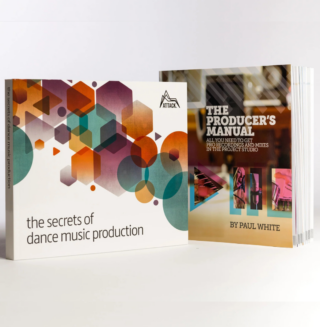
Dance Music Producers’ Power Book Bundle
Get 2 best-selling music production books. Buy more, spend less.


The Secrets of Dance Music Production
The world-leading book on dance music production. Comes with samples too.

The Producer’s Manual
Everything you need to take a mix, from initial recording to final master.

Secretos de la Producción de Música Dance
La guía definitiva para producir música electrónica de vanguardia.
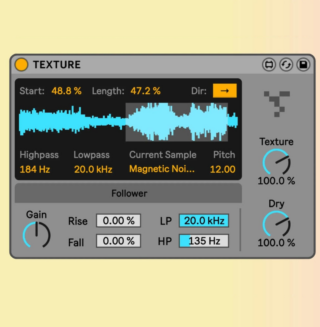

Max For Live: Chance Engine V2
Add controlled yet random fluctuations to your most important parameters.

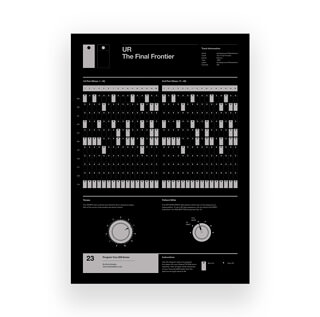
Underground Resistance: The Final Frontier Poster
Anti corporate, political, powerful and progressive the power house of Jeff Mills, Robert Hood and "Mad" Mike Banks needs little introduction.