As Rane turns 45, Rick Jeffs tells the story of the Steelworkerz, the TTM 54 and the magnetic crossfader, and gives his view on AI in DJing.
Rane was founded in 1981 and released its first DJ mixer in 1986 at the request of Richard Long, the sound designer for Studio 54, among many other clubs. This was the beginning of what is now 40+ years of innovation for the DJ market, a CV that includes milestones like the world’s first magnetic crossfader, dual USB connectivity for seamless multi-laptop handoffs, and much more.
As Rane celebraes 45 years in the business, we spoke with Rick Jeffs, Principal Design Engineer at Rane, to get the inside scoop behind Rane’s biggest technical achievements. This interview has been edited for brevity and consistency.
Attack: Rane began in 1981 and released its first DJ mixer, the MP 24, in 1986. Technologically, what are the biggest changes in the world of mixers since then?
Rick Jeffs: The MP 24 came from a very different time. It was a purely analog design built with little more than op-amps, resistors, and capacitors. There was no firmware to write, no software applications to support, and no computer drivers to maintain. If a DJ wanted to play a song, they needed the vinyl record in their hands.
Today, nearly everything has changed. Modern mixers digitize audio as it enters the product, perform most processing in the digital domain, and convert the signal back to analog at the outputs. Digital processing eliminates many of the limitations and tolerances of analog circuitry while making advanced features practical and affordable. Controls are monitored by MCUs, enabling more precise operation and far greater flexibility.
The biggest change may be the connection between the mixer and the computer. Dual USB ports allow two DJs to connect simultaneously, while software platforms such as Serato and Engine provide access to enormous music libraries, streaming services, real-time effects, and advanced performance tools. DJs no longer need to transport hundreds of pounds of vinyl to every gig. Instead, virtually unlimited amounts of music can travel on a laptop, SSD, or media stick.
Let’s talk about how Rane became associated with turntablism. The story goes that a group of New York turntablists sent you a hand-drawn diagram for a new mixer, and Rane engineers flew to New York to meet them. What happened that day?
Rane has always been involved in the DJ market, with early products such as the X3000 Isolator, X5000 Equalizer, and MP 24 mixer.
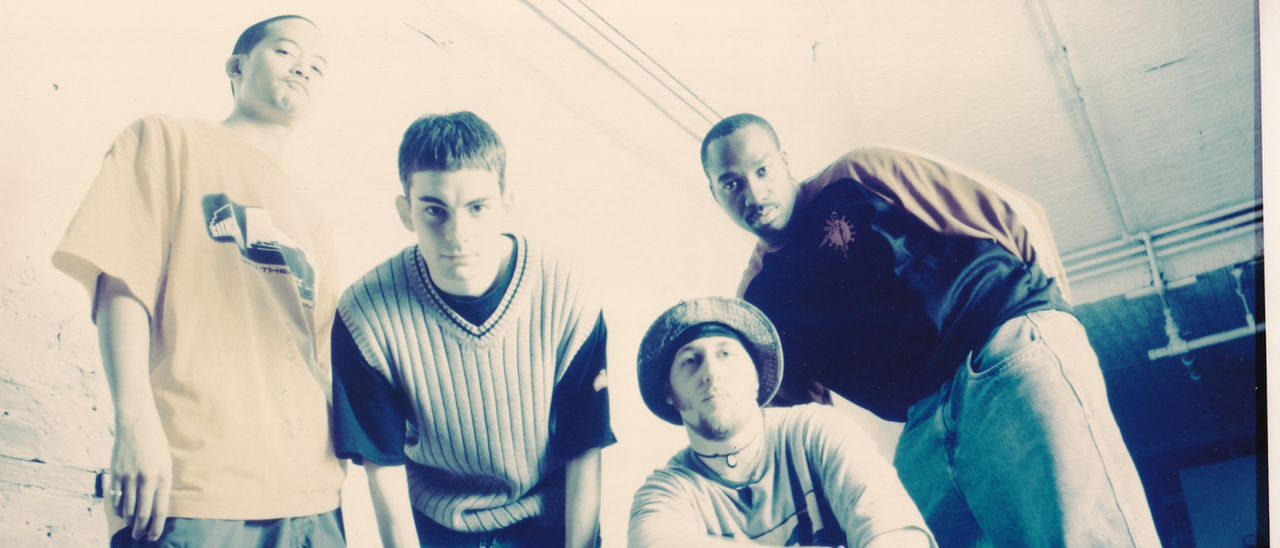
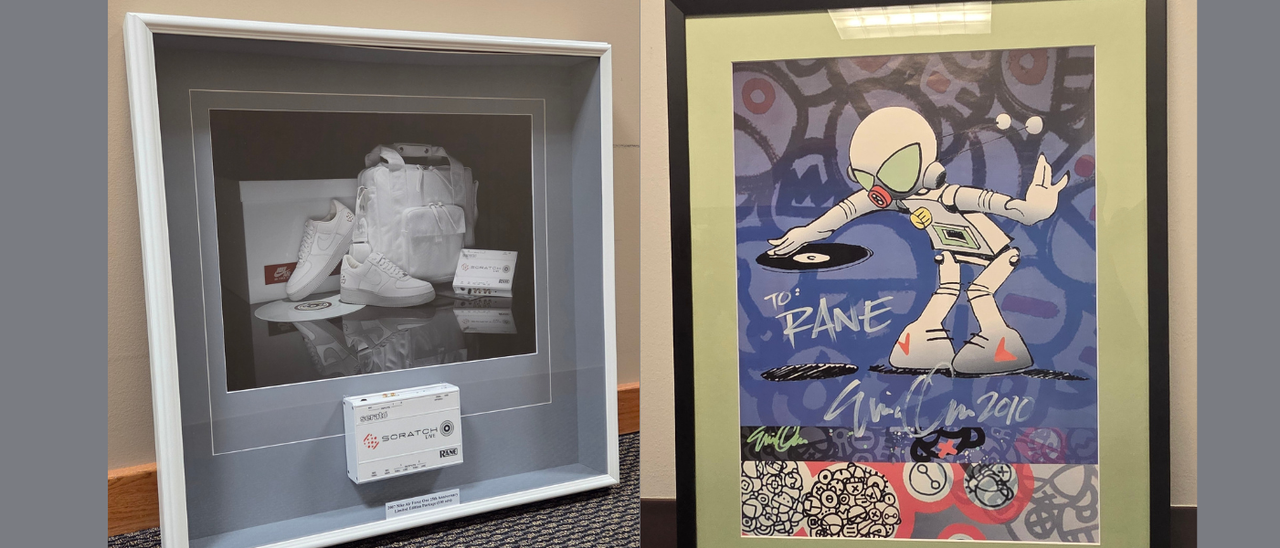
The Steelworkerz DJ crew approached Rane with an ambitious idea: build the ultimate scratch mixer. Intrigued by the opportunity, we flew to New York to meet with them and explore what such a product might look like. Our first meeting took place at a Tableturns event in lower Manhattan, an open-format competition where local DJs showcased their creativity, technical ability, and performance skills. The Steelworkerz crew included Brian Lane (Big Wiz), Doug Coen (Sugarcuts), Marz1, and Peter Parker.
The experience was unlike anything I had encountered before. Our taxi dropped us off in a dark alley in front of a large steel door. When we knocked, a massive bouncer opened the door, looked us over, and said, “You don’t belong here.” After we explained that we had been invited by the Steelworkerz to discuss a new mixer project, his expression immediately changed, and we were warmly welcomed inside.
That evening was my first introduction to true performance scratch mixing and turntablist culture. What I witnessed was far beyond simply playing records. The DJs were using turntables as musical instruments, combining technical precision, creativity, and showmanship in ways I had never seen before. The following night, we met with members of the Steelworkerz in an apartment in the South Bronx, where we sketched ideas and discussed what they believed the ideal battle mixer should be.
Rane recognized an opportunity. The turntablist community was growing rapidly, yet the available mixers often lacked the features DJs were requesting and frequently suffered from durability issues under the demands of competition-style performance. The result was the TTM 54, which delivered many of the features turntablists had been asking for.
The TTM 56 followed and introduced what would become one of the most significant innovations in DJ mixer design: the industry’s first non-contact magnetic crossfader. Combined with improved full-cut channel faders, the magnetic design delivered dramatically better reliability, consistency, and performance than traditional contact-based faders.
The innovations did not stop there. Later Rane products introduced dual USB connectivity, allowing two DJs to remain connected simultaneously and perform seamless handoffs between laptops without interrupting the music. Like the magnetic crossfader before it, dual USB support would eventually become a widely adopted feature throughout the DJ industry.
Looking back, that trip to New York marked the beginning of Rane’s transformation from a company known primarily for professional audio products into a leader in the emerging performance DJ market.
The DJs were using turntables as musical instruments, combining technical precision, creativity, and showmanship in ways I had never seen before.
The magnetic crossfader is an important design in Rane’s history. How did you settle on magnetism as a method?
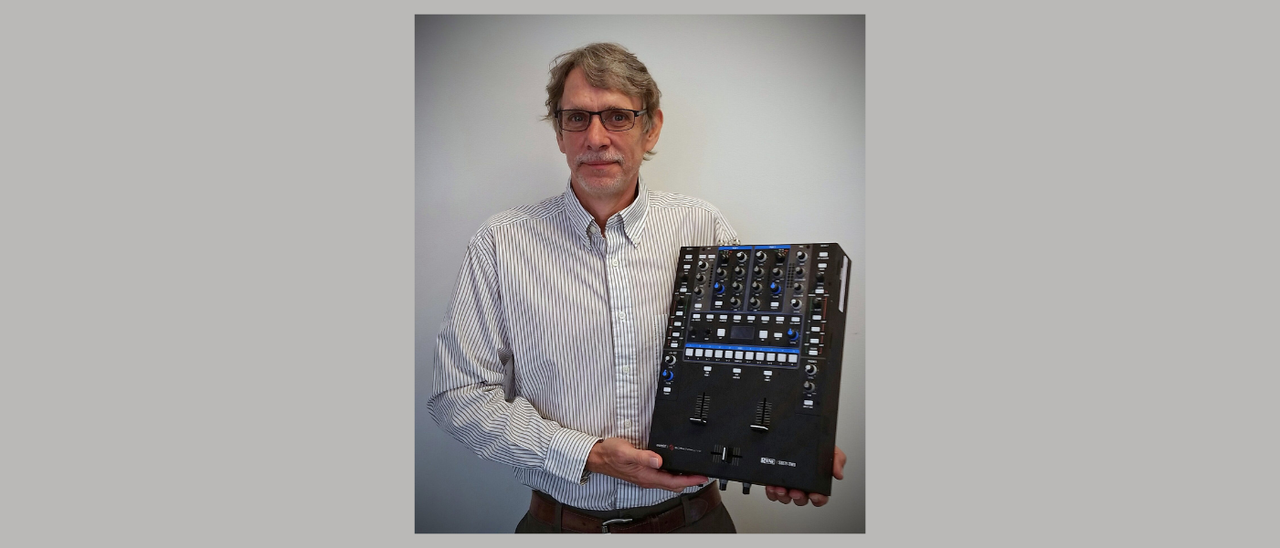
Several technologies were considered, including resistive, inductive, optical, and magnetic sensing. I chose the magnetic approach because it offered the best combination of robustness, performance, and simplicity. It was largely immune to the environmental contamination that often affected conventional faders, while avoiding the complexity associated with optical systems.
Over time, we continued to refine the design, eventually implementing more advanced magnetic sensing methods with improved linearity and resolution. What began as a solution to a reliability problem ultimately became one of the defining technologies of the TTM series and helped establish a new performance standard for DJ mixers.
Is it correct that modern mixers don’t pass audio through the faders/crossfaders, but instead use them to send signals that control the amplifier, which is why there can be different fader curves, reverse control, etc.? Why is this better?
Conventional resistive faders have inherent limitations. They wear with use, become noisy over time, and can develop dead spots that affect performance. Their response is largely fixed by the hardware, making precise cut-in calibration difficult. Even when used only as a position sensor for a VCA, they still suffer from mechanical wear and long-term variability.
The magnetic fader eliminated those problems. By sensing position magnetically and converting that information into a digital control signal, the mixer could precisely calibrate the fader endpoints, implement virtually any taper characteristic, and maintain excellent
linearity without degradation over time. Because there was no physical electrical contact, there was essentially nothing to wear out.
For scratch DJs, this translated into greater consistency, improved performance, and dramatically increased reliability. Looking back, it was one of the clearest examples of how digital control could solve problems that had long been accepted as unavoidable in analog designs.
How is Rane’s technological legacy implemented in modern controllers like One? Is there a direct through-line between that visit to New York and the tech in One?
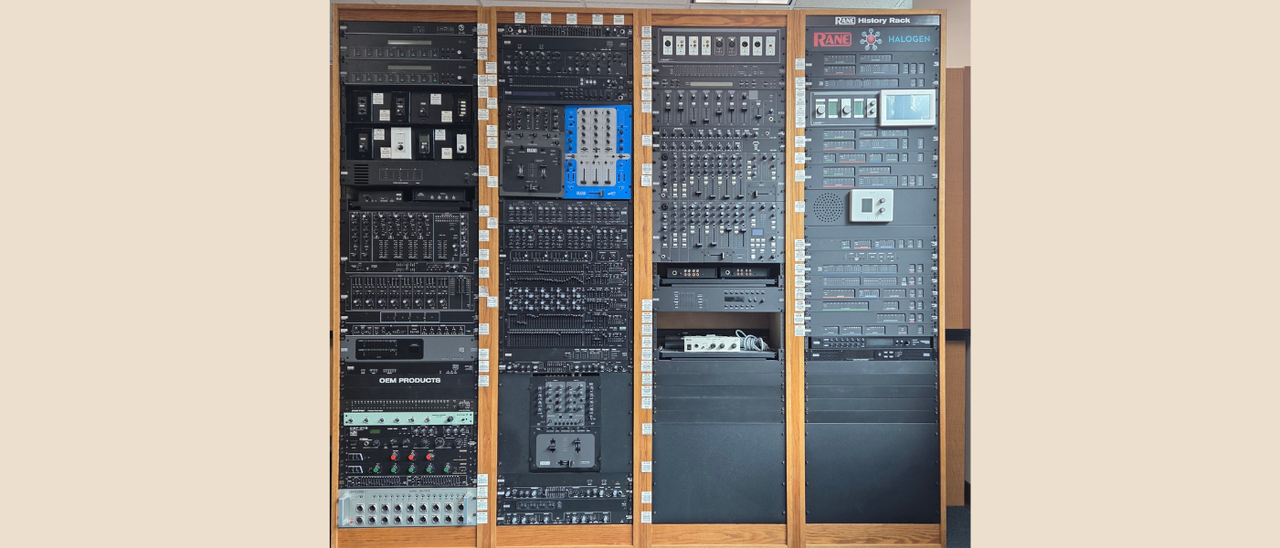
The collaboration with the Steelworkerz crew resulted in the TTM 54, our first mixer designed specifically for turntablists. That quickly evolved into the TTM 56 and eventually the TTM 57. Each generation pushed us further away from traditional analog mixer design and closer to the highly integrated digital systems we develop today.
The TTM 57 combined many of the technologies that would shape the future of DJ products: dual internal USB audio interfaces, dual-computer support, a non-contact magnetic crossfader, deep Serato integration, and a control surface tailored to the way turntablists actually performed. It was no longer just an audio mixer. It had become a tightly integrated hardware and software platform.
The acquisition of Rane by inMusic gave us access to the software, firmware, industrial design, mechanical engineering, and marketing resources needed to continue that evolution and develop the advanced digital products that followed.
Ultimately, the art of reading a crowd, selecting the right music, and creating a memorable performance will remain a uniquely human skill.
How have mixing and turntablism changed since the late ’90s and that visit to NY? What are DJs doing differently in 2026?
Extensively. Modern DJ technology has largely eliminated the need to transport and manage extensive vinyl collections. I remember one DJ telling me that it cost more than $5,000 just to move his record collection to a single event. Today, virtually unlimited music is available from a laptop, external drive, media stick, or streaming service. What once required hundreds of pounds of vinyl can now fit into a backpack.
Software platforms have transformed the performance experience as well. Applications such as Serato and Engine provide access to vast music libraries, advanced effects processing, track management, looping, sampling, and performance features that would have been impractical or impossible with traditional analog equipment.
These changes have fundamentally altered product design. Where earlier mixers were dominated by analog circuitry, modern products are built around high-speed digital systems in which firmware and software define much of the functionality. The engineering focus has shifted from op-amps, VCAs, and analog signal paths toward multi-core processors, high-resolution audio converters, USB Type-C connectivity, high-speed digital interfaces, embedded firmware, and tightly integrated software ecosystems.
While the objective remains the same, helping DJs connect with their audience through music, the technology used to achieve that goal has changed dramatically over the past three decades.
How do you see DJing changing going forward? Is AI taking the humanity out of it?
I expect the pace of innovation to continue accelerating. Modern DJ products are already built around increasingly powerful processors, higher-speed interfaces, advanced software platforms, and sophisticated digital audio systems. As processing capability continues to grow, products will be able to deliver features and performance levels that would have been difficult to imagine only a few years ago.
Artificial intelligence is already beginning to find its way into DJ products and software applications. AI has the potential to help DJs manage and navigate increasingly large music libraries, discover relationships between tracks, streamline playlist creation, and improve workflow efficiency. I do not see this as a technology that diminishes the role of the DJ. Just as digital audio, laptop performance, and streaming services expanded creative possibilities, AI will simply provide new tools that allow DJs to do more and work more efficiently.
Ultimately, the art of reading a crowd, selecting the right music, and creating a memorable performance will remain a uniquely human skill. Technology can provide better tools, but it cannot replace creativity, taste, and experience.
Looking back over the last three decades, the transition from analog mixers and crates of vinyl to connected hardware, software ecosystems, and streaming services has been remarkable. Looking ahead, I suspect the next 10 years will bring capabilities that today exist only as ideas, continuing a pattern of innovation that has defined the DJ industry throughout my career.
Find out more about Rane on their website.
Follow Attack Magazine
Attack Store

Dance Music Producers’ Power Book Bundle
Get 2 best-selling music production books. Buy more, spend less.

The Secrets of Dance Music Production
The world-leading book on dance music production. Comes with samples too.

The Producer’s Manual
Everything you need to take a mix, from initial recording to final master.

Secretos de la Producción de Música Dance
La guía definitiva para producir música electrónica de vanguardia.

Max For Live: Chance Engine V2
Add controlled yet random fluctuations to your most important parameters.


Underground Resistance: The Final Frontier Poster
Anti corporate, political, powerful and progressive the power house of Jeff Mills, Robert Hood and "Mad" Mike Banks needs little introduction.