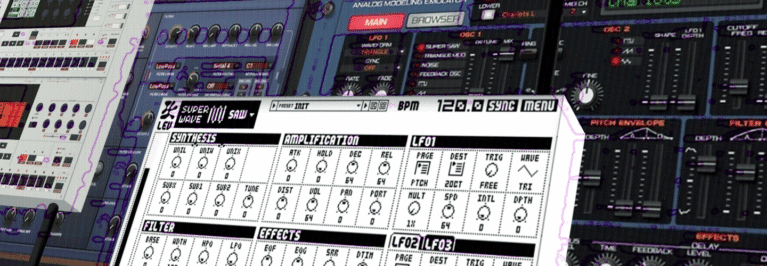
It may seem like some kind of crazy dream but you really can load actual hardware synthesizers into your DAW now. Here’s how to do it – but aren’t emulators illegal?
How amazing would it be to load up a Roland JP-8000 synthesizer in your DAW? Not a recreation like Arturia’s Jup-8000 V, but the actual Roland instrument. It may sound like a pipe dream but this is something that you can do right now. And for free. This is because of emulators, software wrappers that allow you to load firmware from hardware digital synthesizers inside your DAW and use them just like you would any other plugin.
Thanks to AI and vibe coding, there’s been a veritable explosion of emulators recently, bringing what was previously a rather niche sector of the plugin scene into the zeitgeist. In this article, we’ll take a deep look at this phenomenon. We’ll also explain what emulators are, highlight some of the best currently available, and explore how to bring them into your own productions.
What Is An Emulator?
First things first. An emulator is a piece of software that allows your computer to run a program originally developed for a separate machine. Although emulators are common in the computer and video game worlds, they’re becoming more popular in music production, with classic hardware synthesizers, drum machines and even effects units getting ported over for use in your computer or DAW.
These are, by definition, based on digital instruments. Emulators act as hosts and run the original ROMs, tricking them into thinking they’re beavering away inside the intended hardware. This makes them different from modeled emulations, software versions of usually analog synthesizers that approximate the behavior of oscillators, filters, envelopes and other parameters. Emulators aren’t remakes or recreations; they’re the actual hardware running inside your computer. The only thing missing is the DAC.
The best part? They’re usually free. Emulators are, for the most part, open source and freeware, with hobbyist developers building on each other’s work. The sticky part, however, is that they exist in a legal gray zone. Because they require the original ROMs, which you’re not supposed to have unless you own the actual hardware, emulators are essentially illegal. This is why Elektron, for example, has banned discussion of emulators and mods on its Elektronauts message boards. And why this article can’t tell you how and where to find the ROMs. (They’re honestly not hard to find though.)
Curious about this bravely emulated world? Then let’s look at some of the best emulators available right now. Note that many of these are in alpha or beta stage and are, therefore, buggy. Proceed at your own risk.
Elektron Machinedrum and Monomachine Emulators

Although emulators of classic synthesizers and drum machines have been circulating in the darker corners of the web for years now, it was these releases that arguably made the music production scene sit up and take notice. Within a very short time, playable ports of two of Elektron’s early instruments, the much-loved Machinedrum and Monomachine, dropped, and suddenly digging for ROMs became everyone’s new favorite pastime – hence Elektron banning discussion.
The first to make a splash was gearmulator-md-mm, a combination package including both 2001’s Machinedrum and 2004’s Monomachine. Developed by Joe Landers and based on the Gearmulator emulation project from The Usual Suspects (more on these legends in a bit), gearmulator-md-mm allows you to run both of these early Elektron machines in any DAW.
Load them up, and the first thing you’ll notice is they behave exactly like the original machines. That’s because they are those machines. Where plugins like those from companies like GForce and Cherry Audio often augment the user experience with new features and a GUI built for a computer screen, traditional emulators rebuild the hardware as-is. That usually means pressing buttons and looking at a tiny LED screen, a software recreation of that workflow. Producers used to modern plugin conveniences may find this frustrating. But for most, just having access to these coveted machines is worth the download.
That’s not to say they’re completely hardware-bound. Shift-clicking lets you hold buttons for key combinations and parameter locks, for example, and many parameters are automatable in your DAW. They also allow for SySex import, meaning you can play Autechre’s Echoplex gig SySex files on them, for example.
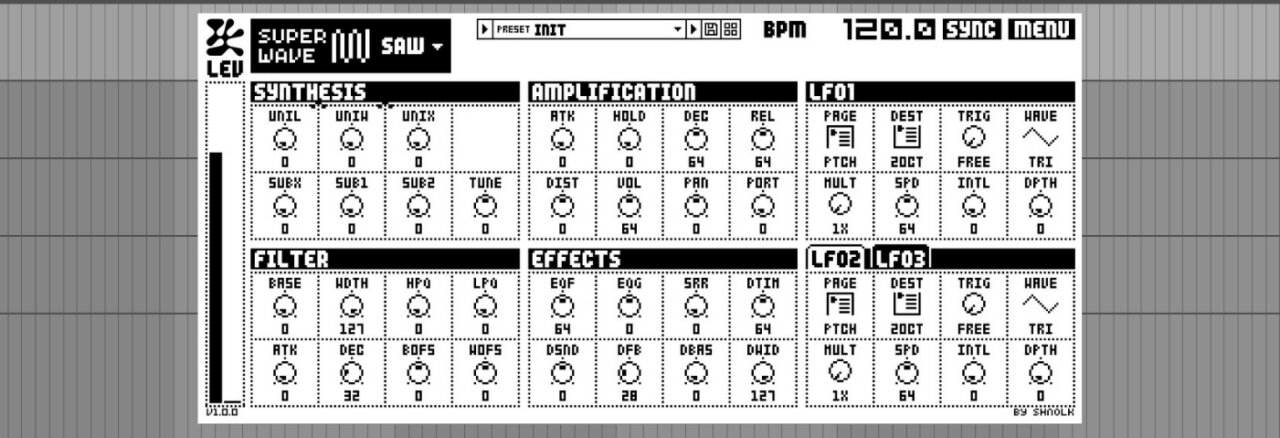
Another Elektron emulator doing the rounds is Monomodule by Shnolk. While finding the necessary ROMs for Monomachine and Machinedrum takes some sleuthing, Monomodule will pull the Monomachine OS 1.32B update from Elektron’s website and install it for you. It also accepts SySex. Unlike Joe Landers’ emulators, though, it presents in a much more DAW-friendly manner. Soundwise, it’s identical to Joe Landers’ version.
The Usual Suspects: Roland JP-8000, Access Virus and Many More
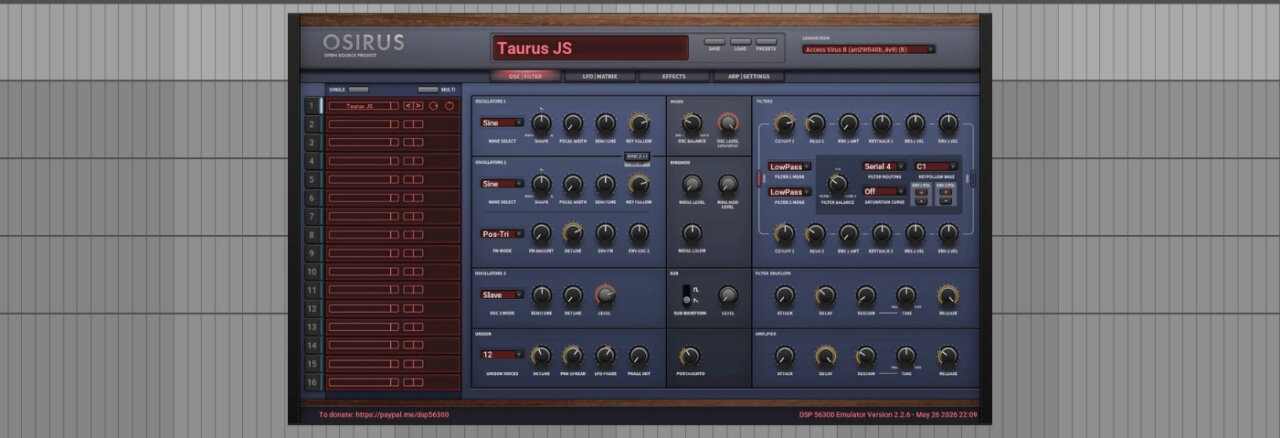
Both gearmulator-md-mm and Monomodule are built on open-source code developed by a team of developers called the Usual Suspects. Before vibe-coding made these processes much easier, TUS were out there reverse engineering old chips, chiefly the Motorola DSP563XX series of processors. These classic DSP chips were used throughout the classic era of 1990s and 2000s virtual analog synthesizers, including in instruments like the Access Virus series, Waldorf Microwave II and Nord Lead series. If you listened to a dance music record in the late 90s, there’s a good chance the DSP came from one of these chips.
Ready to ROM out? For electronic music producers, your first port of Usual Suspects call should undoubtedly be the team’s Virus series. Before Massive brought bass craft to the computer, drum and bass and breaks producers were getting their Reeses and leads from Access’ instruments. The Usual Suspects incredibly have two Access emulators on their site. Osirus houses Virus A, B and C synths in a single plugin, while OsTIrus does the Virus TI. And they sound absolutely incredible.
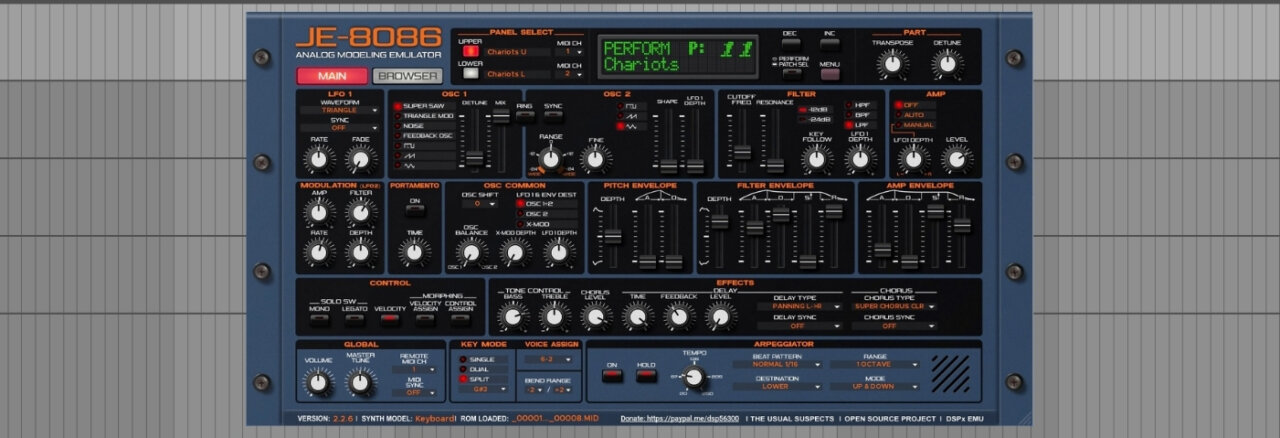
Although the majority of releases from TUS focus on Motorola chip synths, a release earlier this year added a surprising emulator to the group’s roster: the Roland JP-8000. Called JE-8086, it rebuilds Roland’s famous ‘90s trance synth, supersaw and all – no mean feat considering the JP-8000 used a custom Toshiba chip designed for Roland rather than an off-the-shelf one. TUS is reportedly working on an update for JE-8086 that will bring it in line with the JP-8080 rackmount version, with 10 voices of polyphony, unison mode and a second noise oscillator.
The Usual Suspects are very much at the forefront of emulator technology, and have versions of the Roland JD-990, Waldorf Q and Novation SuperNova, among others, in the pipeline. Check out their Discord to stay up to date.
MAME: From Video Games To Synthesizers
All of this synthesizer emulation started with video games, surprisingly enough, and something called MAME. Standing for Multiple Arcade Machine Emulator, MAME is an open-source emulator originally used to port hardware arcade games to home computers. This then expanded to include consoles, classic computers and, eventually, synthesizers and drum machines. Very cool, but you couldn’t use them in your DAW as they existed only within the MAME framework. You could play them with a MIDI controller, but without a lot of fiddly routing of internal audio, that was pretty much where it ended.
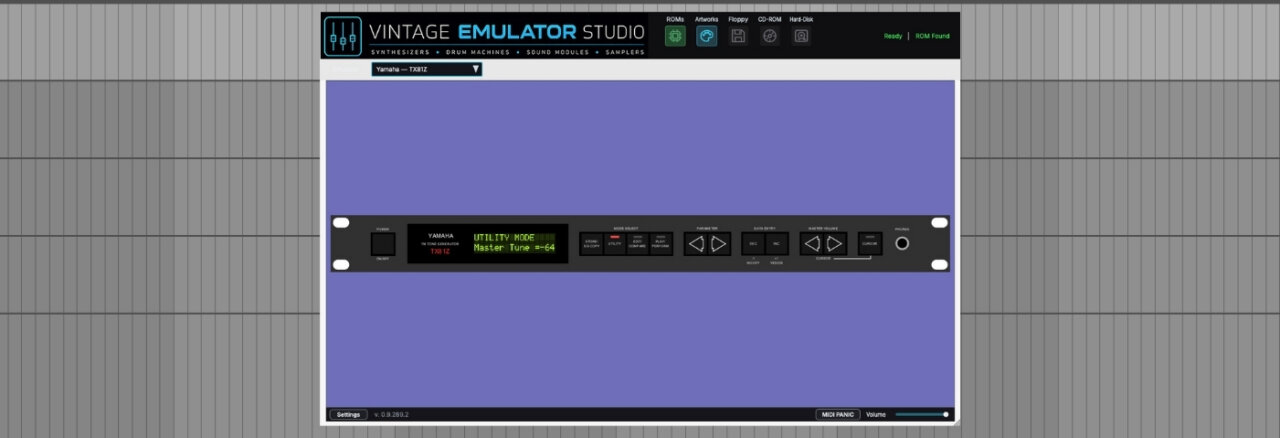
Enter Vintage Emulator Studio. Put together by emulator fan Autodafe with the help of AI, the free software lets you run a number of pre-existing MAME emulations within a single plugin. Problem solved!
You can’t just drop any MAME emulator into VES though. It allows for 45 of the most complete instruments, including Casio CZ-101, Akai MPC60 and Yamaha TX81Z. You do, of course, need the ROMs, and in many cases other downloads as well, like the firmware for the LCD screen. It can get pretty nerdy, but that’s also part of the fun.
Why bother with searching for multiple downloads per emulation? Many featured instruments are pretty rare, like the Yamaha MU-50 and Ensoniq VFX. Beware, though, as not all of these are 100% complete. Many stalled out at the alpha phase. While Autodafe has chosen emulators that are largely playable, many will not be perfect.
These are just a few of the emulators currently available. And, with vibe-coding making this kind of work ever easier, we’re sure to get many more in the near future.
Follow Attack Magazine
Attack Store
Dance Music Producers’ Power Book Bundle
Get 2 best-selling music production books. Buy more, spend less.
The Secrets of Dance Music Production
The world-leading book on dance music production. Comes with samples too.
The Producer’s Manual
Everything you need to take a mix, from initial recording to final master.
Secretos de la Producción de Música Dance
La guía definitiva para producir música electrónica de vanguardia.

Max For Live: Chance Engine V2
Add controlled yet random fluctuations to your most important parameters.


Underground Resistance: The Final Frontier Poster
Anti corporate, political, powerful and progressive the power house of Jeff Mills, Robert Hood and "Mad" Mike Banks needs little introduction.